Item (0) Subtotal
$0.00
Promotions
-$0.00
Shipping
TBD
Tax
TBD
CLICK TO ENTER COUPON CODE

When it comes to comparing 3406E vs C15, diesel enthusiasts, fleet managers, and truck owners often find themselves split between two of Caterpillar’s most iconic powerplants. Both engines are known for durability, torque, and rebuildability, but each offers unique advantages that can affect long-term ownership.
Choosing between them involves more than horsepower numbers, it’s about understanding reliability, performance, cost, and applications. This guide provides a balanced, fact-based look at the CAT 3406E vs C15, helping you make the right call whether you’re buying, rebuilding, or maintaining a Caterpillar engine.
The CAT 3406E made its debut in the mid-1990s as one of Caterpillar’s first fully electronic heavy-duty diesel engines. It evolved from the mechanical 3406C, bringing improved fuel control and emissions performance.
Designed for long-haul trucks and vocational applications, the 3406E quickly earned a reputation for being powerful, efficient, and exceptionally durable. Its electronic controls provided more precise fuel delivery, which not only enhanced power but also improved fuel efficiency compared to its mechanical predecessors.
The CAT C15 followed in the early 2000s as a direct successor to the 3406E. Caterpillar aimed to build on the 3406E’s proven platform while refining the design for stricter emissions compliance and smoother performance.
The C15 introduced updates such as variable turbo geometry, higher injection pressures, and improved cooling systems. However, beneath these upgrades, the core architecture remained largely the same, a testament to the 3406E’s successful foundation.
While both engines share a 15.2-liter displacement, the C15 incorporated improved airflow, better engine management, and updated emissions systems to meet early EPA standards. The result was a more refined engine that maintained the same serviceable wet-sleeve design and rebuildability that made the 3406E so popular among owner-operators and fleet mechanics.
Although similar in architecture, the CAT 3406E vs C15 comparison reveals subtle but meaningful differences in output and configuration.
Both engines feature Caterpillar’s legendary wet-sleeve design, allowing in-frame rebuilds without replacing the entire block. For operators, that means longevity, reduced downtime, and significant long-term savings. In real-world operation, the 3406E is prized for its simplicity and rugged consistency, while the C15’s refinements deliver smoother throttle response and slightly improved economy.
When comparing C15 vs 3406E, performance often comes down to tuning and application. The 3406E’s mechanical backbone and simpler electronic system give it an old-school diesel feel, linear torque delivery, predictable response, and strong low-end power. It’s not uncommon for drivers to praise its “seat-of-the-pants” pull, especially in heavy haul or grade climbing conditions.
The CAT C15, on the other hand, refines that same foundation. With variable turbo technology and optimized injection timing, the C15 offers smoother power delivery and a broader torque curve. This makes it ideal for modern on-highway use, where consistent performance and fuel efficiency are key. The difference becomes most noticeable in throttle modulation and mid-range acceleration. The C15’s electronics adapt to driving conditions, resulting in more efficient fuel use without sacrificing torque.
In terms of efficiency, the CAT C15 vs 3406E gap is small but measurable. The C15 typically yields 0.2–0.4 mpg better fuel economy depending on load and terrain. While this may seem modest, it translates to significant savings over hundreds of thousands of miles in fleet operations. Its advanced ECM also allows finer tuning for emissions and power, which gives it an edge in regulated environments.
However, the 3406E remains a favorite among operators who prioritize ease of repair and simplicity over marginal fuel savings. It has fewer sensors, fewer failure points, and can often be maintained without specialized diagnostic equipment. For that reason, many owner-operators still prefer the 3406E for long-haul use, especially when reliability and self-serviceability take priority.
In real-world terms, the 3406E delivers raw dependability, while the C15 offers refinement and modern efficiency. Both engines can easily exceed a million miles with proper care.
Reliability has always been a cornerstone of Caterpillar’s legacy, and both of these engines are prime examples. The 3406E is often praised as one of the last “mechanically honest” CAT engines, a powerplant that can take abuse, operate in extreme conditions, and keep running. Its longevity is legendary; with regular maintenance, it’s not uncommon for these engines to run over 1,000,000 miles before major overhaul.
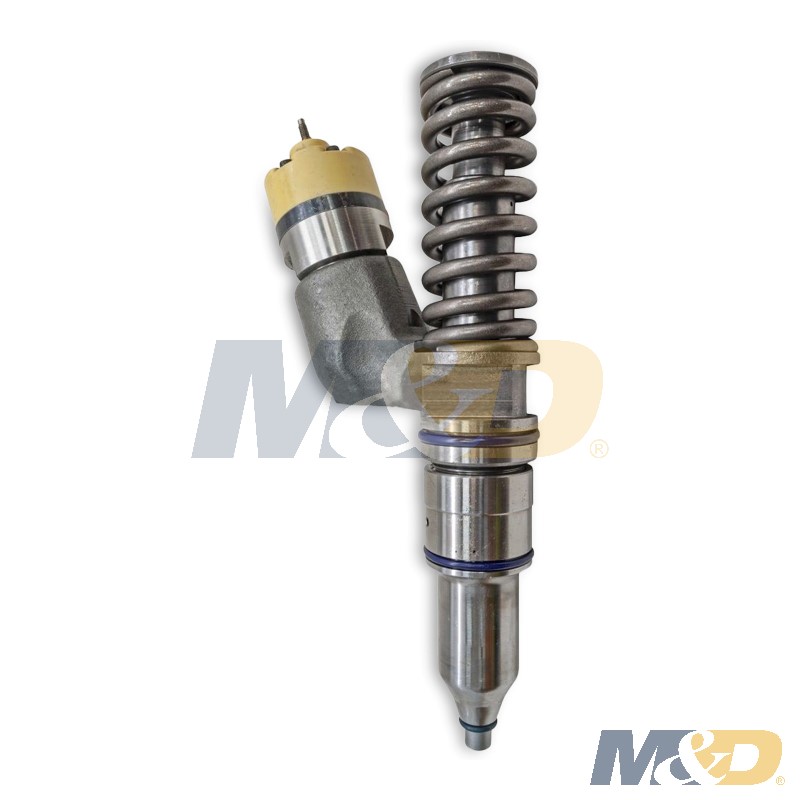
Typical 3406E Cat engine problems include oil leaks from front or rear main seals, occasional injector wear, and minor head gasket seepage with high mileage. Fortunately, all of these issues are straightforward to address, and parts availability remains strong. The 3406E’s design simplicity means fewer electronic failures and easier diagnosis for independent mechanics.
The C15, while built on the same block, introduced more complex emissions components that can occasionally complicate reliability. Early C15 models used an Acert system that included variable valve actuators and twin turbochargers.
These added parts improved emissions but also introduced new failure points, particularly concerning turbo actuators, sensors, and oil line leaks. However, many of these issues were refined in later builds, and with proper maintenance, the C15 remains extremely durable.
Longevity between both engines is similar. Each can exceed a million miles with consistent service, quality oil, and proper coolant management. For the C15, maintaining clean sensors and performing regular ECM updates is crucial. For the 3406E, the focus should be on injector health and oil seal integrity.
To extend service life:
Overall, the CAT 3406E vs C15 reliability debate depends on how each engine is maintained. The 3406E wins for simplicity and ease of repair, while the C15 offers better refinement and emissions management when serviced correctly.
From a cost-of-ownership perspective, both engines are designed for longevity and engine rebuild potential, two traits that make them stand out among heavy-duty diesels. The 3406E typically has lower upfront and maintenance costs due to its simpler electronic system and minimal emissions equipment. Rebuild parts are widely available, and the process is well-documented, making it easier for mechanics to perform in-frame rebuilds at lower labor costs.
The C15, while slightly more complex, offsets its higher parts costs with better fuel efficiency and longer oil change intervals. For large fleets, these incremental savings can add up significantly over time. However, rebuilds tend to be more expensive due to its advanced injection and turbo systems.
Typical full rebuild costs:
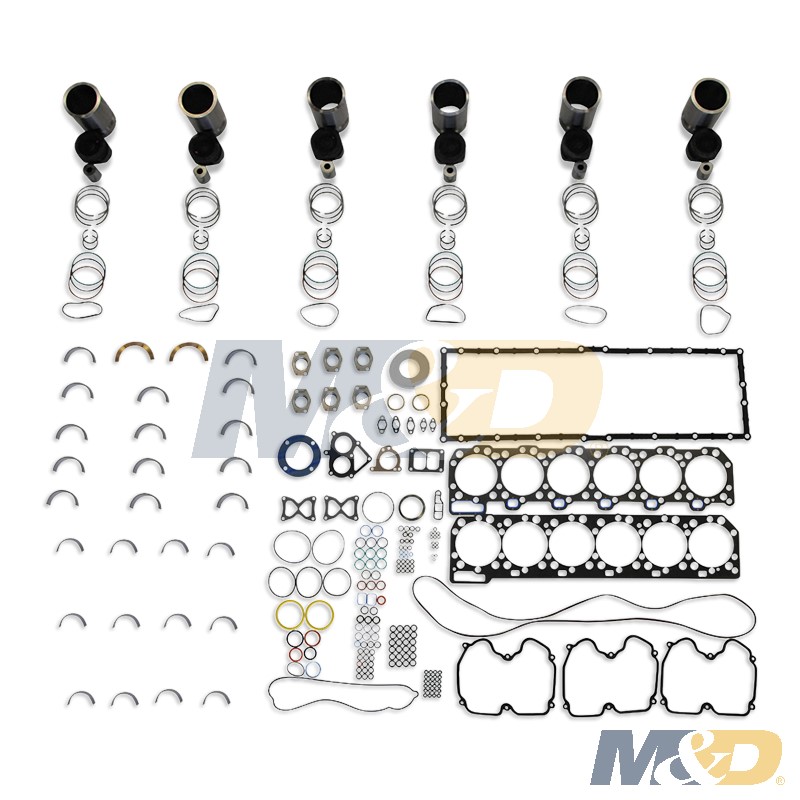
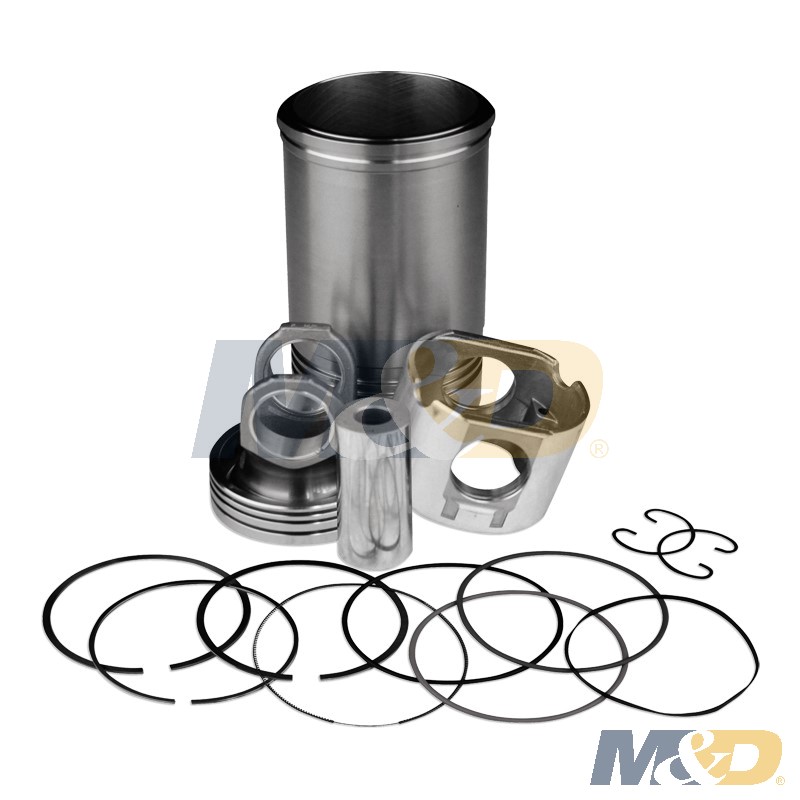
Rebuild considerations include checking for liner wear, inspecting crank journals, and replacing all seals and gaskets. Caterpillar’s modular design allows both engines to be rebuilt multiple times throughout their lifespan. Using OEM or high-quality aftermarket kits, like those offered by The Diesel Store, helps ensure consistent performance and long-term reliability.
For operators planning a rebuild, it’s wise to:
Ultimately, cost of ownership depends on the balance between uptime, fuel economy, and ease of service. The 3406E remains a low-cost workhorse, while the C15 delivers value through refined performance and fuel savings over long hauls.
While both engines are versatile, their characteristics make them better suited for different environments.
Its straightforward design makes it perfect for operators who perform their own maintenance or work in areas with limited diagnostic support. It’s also favored by rebuilders and enthusiasts who value mechanical integrity and proven performance.
Its improved electronics and turbocharging make it more adaptable to varying driving conditions. For businesses running modern logistics routes or high-mileage operations, the C15’s efficiency and refinement make it a compelling choice.
In short, if you want a classic, durable engine that’s easy to maintain, choose the 3406E. If you prefer advanced control, improved fuel economy, and modern performance, the C15 is the logical upgrade.
Because these engines look similar, identifying which one you have can be confusing. Here’s how to tell them apart.
Look for the serial number plate located on the valve cover or timing gear housing. Prefix codes starting with “5EK,” “6TS,” or “1MM” indicate a 3406E. Codes such as “MXS,” “BXS,” or “NXS” identify a C15.
The C15’s valve cover is slightly more rounded and features different breather and sensor configurations compared to the 3406E.
The C15 includes more sensors, turbo actuators, and emissions-related hardware. The 3406E’s layout is cleaner with fewer electronic connectors.
CAT labels explicitly list “3406E” or “C15.” Use this information when ordering parts or performing diagnostics.
Knowing exactly which engine you have ensures compatibility when purchasing parts or scheduling rebuilds. The Diesel Store offers expert guidance for identifying serial numbers and selecting the correct rebuild kits or components for your engine family.
The 3406E vs C15 debate doesn’t have a one-size-fits-all answer. The CAT 3406E remains a proven, easy-to-maintain workhorse known for reliability and rebuildability, while the C15 represents the natural evolution toward smoother performance, better fuel economy, and emissions compliance.
Both engines carry Caterpillar’s hallmark durability and are capable of exceptional service life. Your ideal choice depends on priorities, mechanical simplicity or modern efficiency. For premium parts, expert rebuild kits, and trusted advice on either engine, visit The Diesel Store to keep your CAT running strong for the long haul.
Products for Your CAT Engine